
 Evidence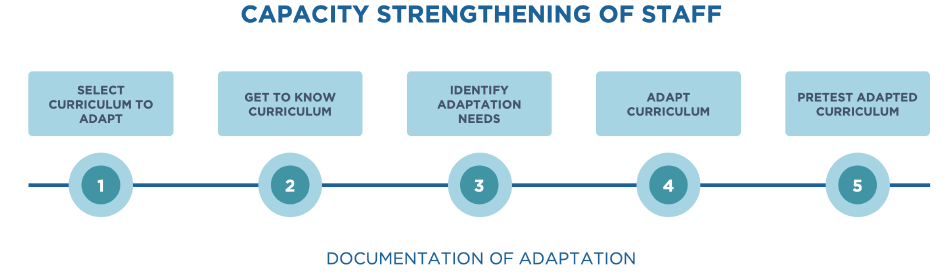
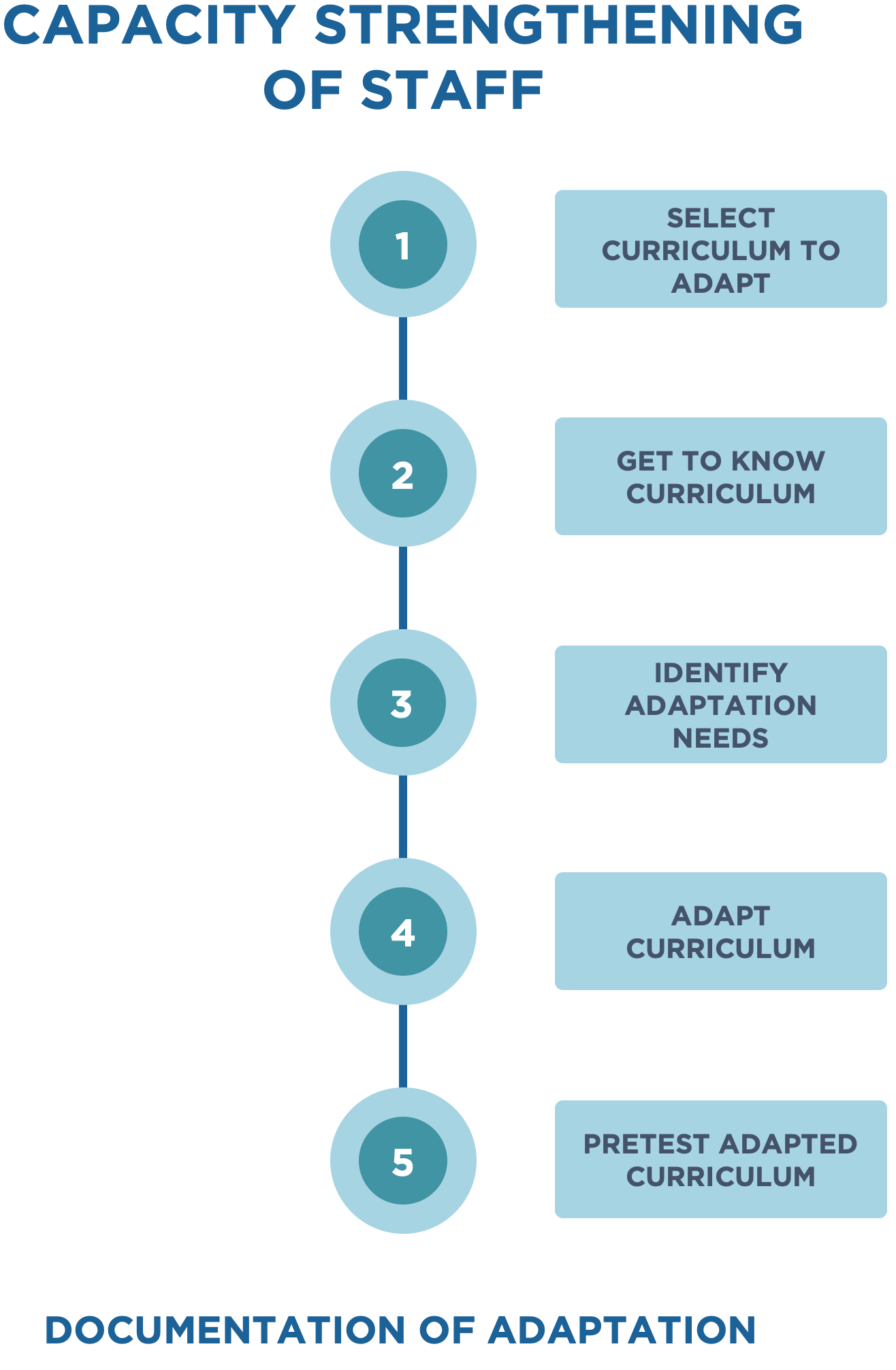
1. Select curriculum to adapt: You need to consider evidence of effectiveness, whether the content and goals (e.g. in terms of attitude and behaviour change) are aligned to your context and population, whether the methods are appropriate, feasible in terms of participant availability and motivation, whether your organisation has the capacity to adapt and implement this.
2. Get to know the curriculum: Contact the original designers and implementers to get their advice, review the curriculum content and methodology in detail, and experience the curriculum as a participant or observer.
3. Identify adaptation needs: The language, images, examples, and exercises may all need to be changed for your context. You will need to understand the characteristics of your participants and programme staff and the socio-cultural, political and economic context.
4. Adapt curriculum: This involves adapting the content (language, images, examples) and delivery (profile of facilitators, location, timing, and frequency of sessions to suit participants). The process is key. You need to involve diverse staff and stakeholders, including intended beneficiaries. You also need to ensure fidelity to key core elements of the original programme, e.g. core content, exposure/intensity, and facilitator training.
5. Pre-test adapted curriculum: test the adapted materials and approach with a small subset of your target participants, possibly in a compressed time, give facilitators practice, observe, and take field notes, debriefs with facilitators, individual and group interviews with participants, pre-test report with recommendations to make adjustments and prepare curriculum for full piloting.
 Related resources